
The defense budget is the biggest payroll in the game, and it does not decide who wins. The small firms that win from it do what Tampa Bay does.
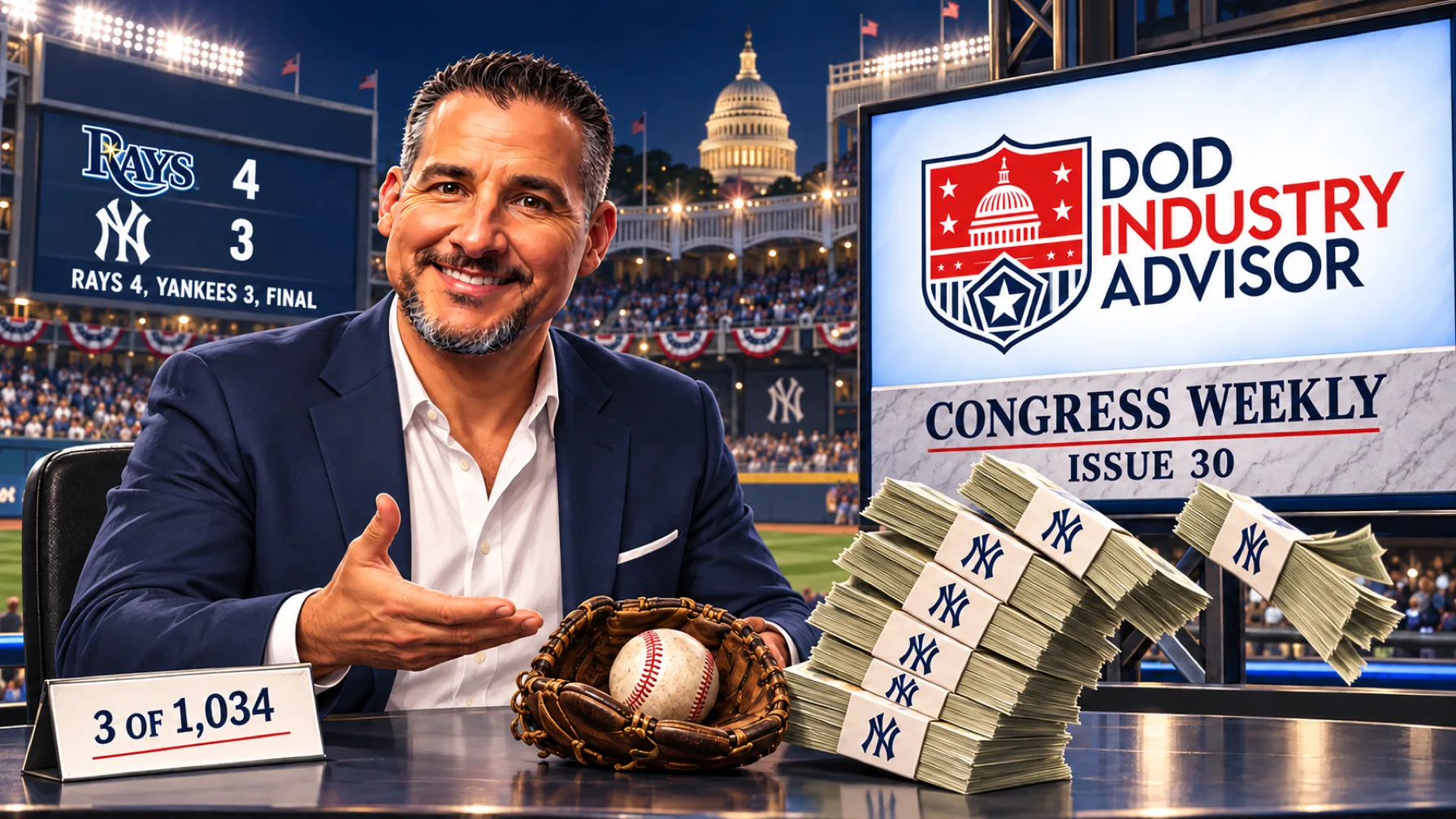
Eight months ago the Miami Marlins designated Victor Mesa Jr. for assignment, the sport’s polite term for letting a player go. On Wednesday night in the Bronx he hit a two-out, two-run homer off Max Fried in the sixth inning. Tampa Bay won 4–3 and swept the series. The most expensive roster in the American League went home.
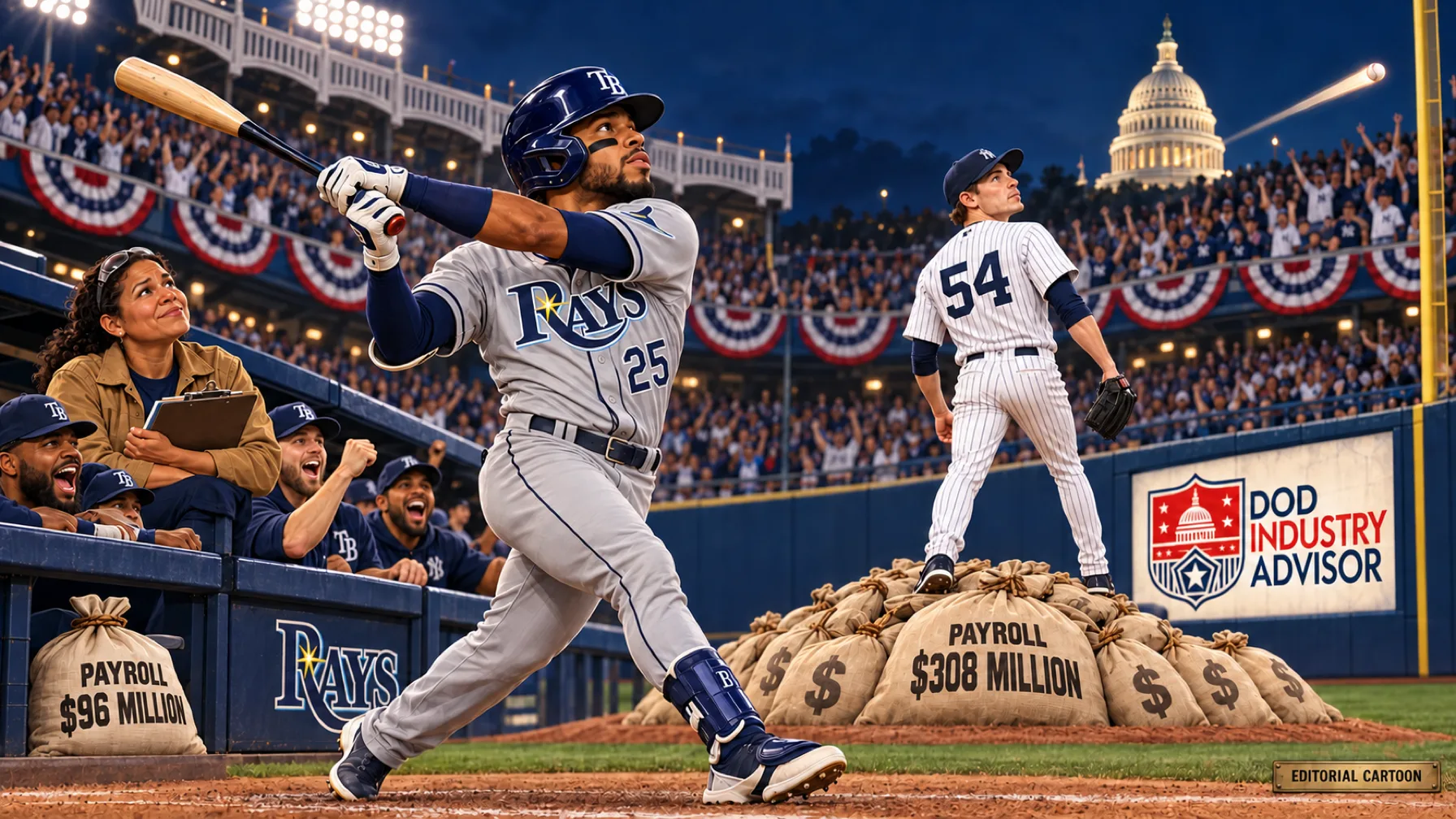
New York carried a $308 million payroll this year, by Spotrac’s count, and scored five runs in three games. Tampa Bay carried $96 million and finished with the American League’s best record.
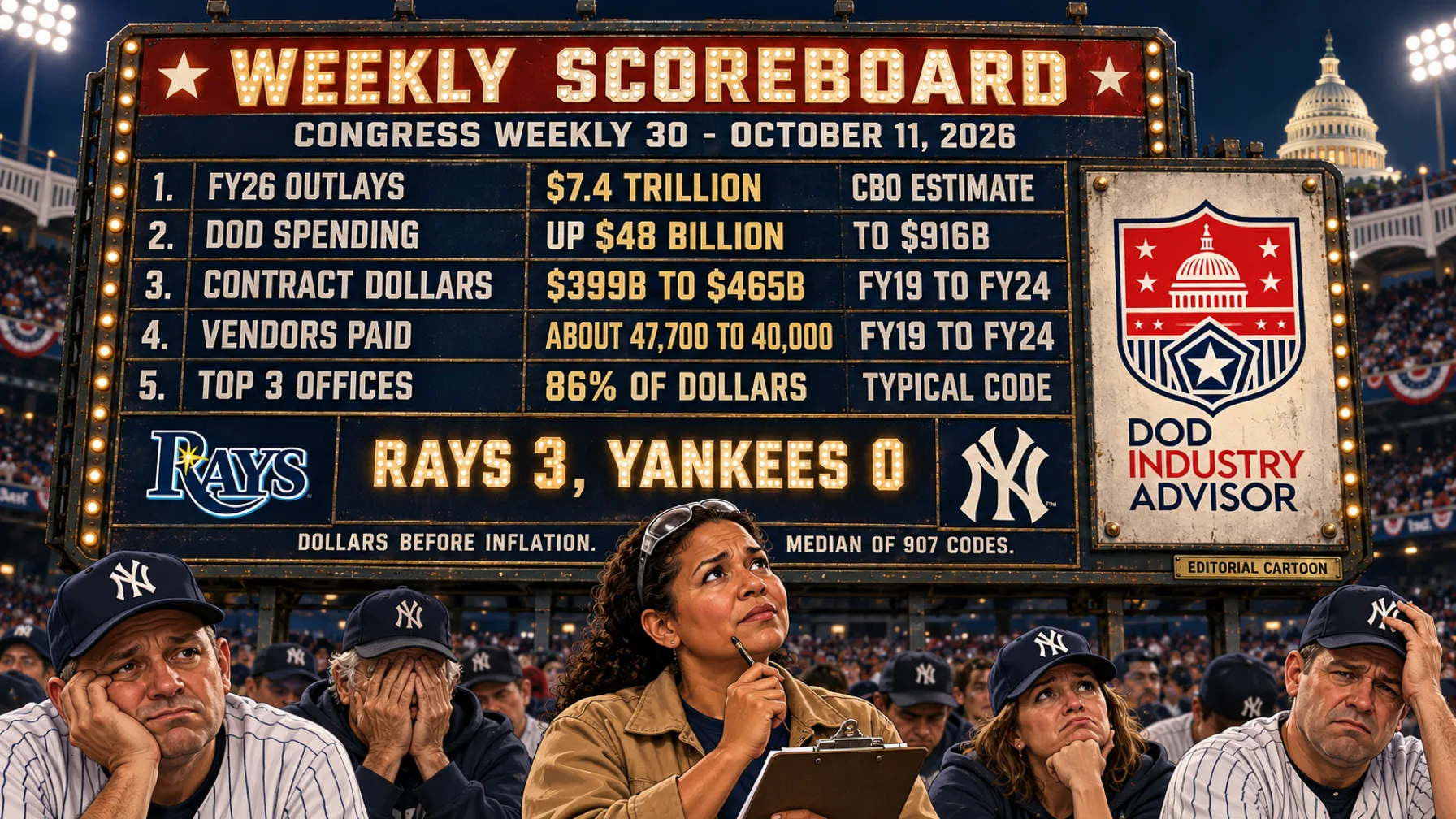
The next day the Congressional Budget Office published its estimate of a larger payroll. The government spent $7.4 trillion in fiscal 2026, and the Defense Department’s military spending rose $48 billion, or 5 percent, to $916 billion.
Small business was one of the five accounts I carried to Capitol Hill for the Pentagon’s acquisition office. The size of that number never told a twelve-person company where to send a proposal, and it still does not. Firms your size win the way Tampa Bay does: at one address they know better than anyone else.
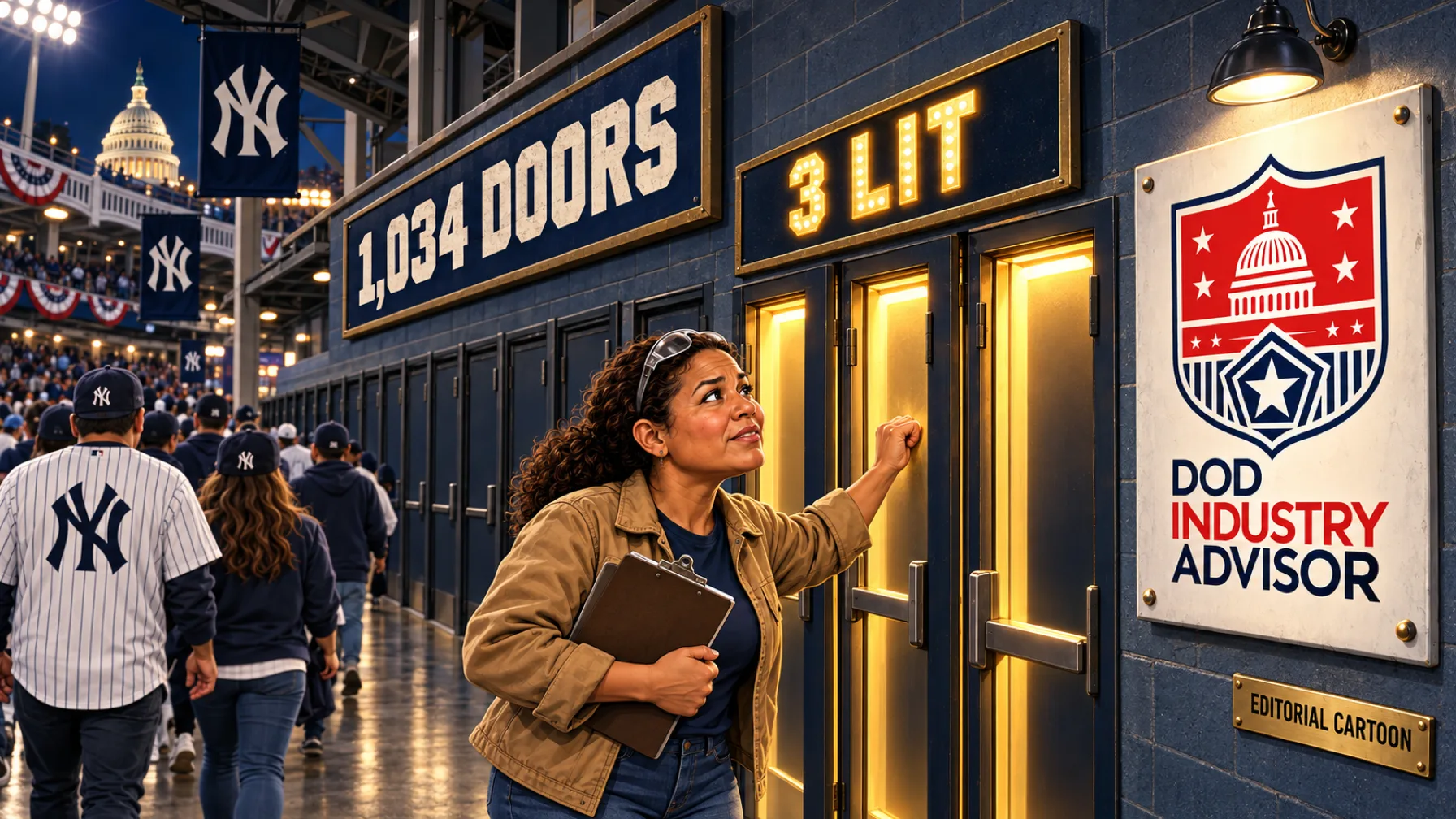
3 of 1,034. In fiscal 2024, 1,034 contracting offices obligated Defense Department contract money. For the typical product or service the Department buys, three of them accounted for 86 percent of the dollars.
The market for what you make is not the Pentagon. It is closer to three rooms. A firm your size can know three rooms. DIA analysis of federal contract records: the median across 907 product and service codes with at least $10 million in obligations. Large services codes are spread wider; see the Playbook.
The Number Grew. The Roster Shrank.
Defense contract dollars are higher than they were five years ago. The roster is smaller. Between fiscal 2019 and fiscal 2024, the last year complete in DIA’s copy of the federal contract record, the Department’s obligations rose 17 percent before inflation, from $399 billion to $465 billion. After inflation they slipped about 5 percent. The number of vendors paid fell 16 percent, from about 47,700 to about 40,000, and it fell in each of the three years through 2024.
The whole decline came from vendors taking in less than $1 million a year, a group that lost more than 8,300 names. The count above $1 million grew 6 percent.
Washington keeps score the Yankee way. The law sets the government’s small-business goal at “not less than 23 percent of the total value of all prime contract awards.” That is a share of the payroll. Nothing in that number counts how many teams are still playing.
The top of the table looks like New York. In fiscal 2024, 83 registered business units each took in more than $1 billion, and together they collected 44 percent of the money. The typical one sold to eleven contracting offices.
Your part of the table looks like Tampa Bay. About 10,100 vendors took in between $1 million and $25 million, and shared 12 percent of the dollars. The typical one sold to two offices. Sixty-three percent got at least four-fifths of their money from a single office, a figure that has held between 59 and 63 percent in every complete year since fiscal 2019.
The Dodgers Are Still Playing
The objection is still in the tournament. Los Angeles spent $339 million and is scheduled to open the National League Championship Series in Milwaukee on Sunday night. Money buys depth, and depth buys a seat in October. The largest contractors hold that seat every year, and no small firm will take it from them by spending.
A seat is all it buys. The Mets carried the largest payroll on the same count and finished 74–88. A twelve-person firm was never trying to be the Dodgers. It is trying to win one series, in one park, against whoever else turned up at that office.
The pattern is not one lucky contract. The typical firm in that band held eight awards, and only one in nine held a single one. The records still cannot say that focus causes the win. They show where firms your size are standing when the money arrives. A firm with one customer also has one way to fail, which is a reason to know the second and third room and no reason to chase all 1,034.
The Board
The middle column is what the record shows. The last column is the next thing you can observe.
| Item | What the record establishes | What to watch next |
|---|---|---|
| Fiscal 2026 | CBO’s estimate of October 8: $7.4 trillion in outlays, a $2.0 trillion deficit, Defense Department military spending up $48 billion to $916 billion. | Treasury’s official year-end statement |
| House | No recorded vote since September 16. Pro forma sessions October 5, 6 and 9. | The first roll call after the election, scheduled for November 9 |
| Senate | Pro forma sessions October 5, 6 and 9; no business conducted. Last roll call September 30 (vote 256). | A cloture vote on the motion to proceed to H.R. 2347, scheduled for about 5:30 p.m. on November 9 |
| Funding | P.L. 119-103 holds fiscal 2026 rates through December 11 and bars new starts and production increases on that money: the freeze. | Full-year bills or a second stopgap in the lame duck |
| DIU | Both CLASS ACT calls close October 13. The Low Cost ISR prize challenge closes October 14, sets no revenue floor and “seeks mature solutions, not concepts.” | Whether you have an aircraft that flies, or a slide |
Neither chamber is scheduled to vote again until November 9. Until then the calendar is gavels.
| Sun | Mon | Tue | Wed | Thu | Fri | Sat |
|---|---|---|---|---|---|---|
| Oct 4 | 5pro forma · both | 6pro forma · both | 7 | 8CBO FY26 estimate | 9pro forma · both | 10 |
| 11today | 12 | 13pro forma sched. · DIU closes | 14DIU LC-ISR closes | 15pro forma sched. | 16 | 17 |
| 18 | 19pro forma sched. | 20 | 21 | 22pro forma sched. | 23 | 24 |
| 25 | 26pro forma sched. | 27 | 28 | 29pro forma sched. | 30 | 31 |
| Nov 1 | 2pro forma sched. | 3Election Day | 4 | 5pro forma sched. | 6 | 7 |
| 8 | 9Both sched. · 5:30 cloture vote | 10Both sched. | 11House sched. · Veterans Day | 12House sched. | 13 | 14 |
Dark = both chambers in session. Outlined = one chamber only. Blank = out; “pro forma” = opened and closed with no business. Past days from the House and Senate floor records; days marked “sched.” are schedule, not record. Pro forma dates after October 13 are the Senate’s announced schedule.
Playbook: Find Your Three Rooms
A contracting office is the organization whose contracting officer signs the award, and every federal contract record names it. Most capture plans name a service or a program. Few name the office, the only thing in the record that can buy from you.
The office is the market
Every award also carries a product or service code, a four-character label for what was bought. That code is on any contract you have held. Search that code on USAspending for the last three fiscal years, download the transactions, and add up the dollars by awarding office. The top three are your rooms.
Consider a hypothetical fourteen-person firm that calibrates test equipment and has chased “Air Force work” for two years. Its download shows 31 offices bought its code. Three of them bought most of it, and one is forty minutes from the shop. The capture plan just got shorter.
If you sell engineering or program support, expect more rooms. The Department’s largest engineering-support code was bought by 373 offices in fiscal 2024, and its top three accounted for 16 percent. The exercise is the same. The list is longer.
Pull three years of awards under your main product or service code. Write down the three offices that bought the most and the firms that won there. If you cannot name one person at any of those three offices, that is the plan for next week.
The Final Whistle
Congress comes back in November to argue about the size of the number. Let it. Tampa Bay never needed New York’s payroll. It needed the man another club had let go, standing in the right place in the sixth inning. The Yankees had the money. Go find your three rooms.
How many contracting offices produced most of your federal revenue last year?
A) One
B) Two or three
C) More than three
D) I would have to look
E) None yet. Still looking for the first
Reply with your letter and one line on why. The most useful answer runs next week, anonymous if you prefer.
How I Help Small Defense Businesses
Through DoD Industry Advisor I help small defense businesses turn market information into a pursuit decision: the buyer, the funding signals, the incumbent, the timing, the gaps in your position, and what to do next. Bring one opportunity you are weighing and the decision you need to make. Request a 30-minute fit call; we scope the work in writing before it starts. What DIA does.
The November calendar. Issue #29’s calendar showed both chambers scheduled in session November 9 through 13. The Senate’s schedule has it out November 11 through 13, and the House calendar lists November 9 through 12. Both chambers are scheduled together on November 9 and 10 only.
Sources checked
CONFIRMED
- ALDS, Rays–Yankees: Tampa Bay won the series 3–0: 1–0 (Oct. 3), 5–2 (Oct. 5), 4–3 (Wed., Oct. 7, Yankee Stadium). New York scored five runs in the three games. Victor Mesa Jr. (Rays left fielder, No. 25, bats left), designated for assignment by Miami on Feb. 3, 2026, hit a two-run home run off Max Fried (Yankees, No. 54) with two out in the top of the sixth of Game 3, taking the score from 2–2 to 4–2. The Rays were the road team. Aaron Judge does not appear in the Game 3 box score. Verified 2026-10-10. MLB.com game page · MLB.com results · MLB.com, Mesa
- NLDS and the schedule: Los Angeles beat Atlanta 3–1 (clinched Oct. 7). NLCS Game 1, Dodgers at Brewers, scheduled Sunday, Oct. 11, 8 p.m. ET. Cleveland beat Chicago 2–0 in ALDS Game 5 on Saturday, Oct. 10, and won that series 3–2. ALCS Game 1, Cleveland at Tampa Bay, is scheduled Monday, Oct. 12, 8 p.m. ET. Verified 2026-10-11. MLB.com schedule
- Standings: Tampa Bay 98–64, first in the AL East with the American League’s best record; Milwaukee 103–59 and Los Angeles 100–62 had better records in the National League; New York Mets 74–88, fifth in the NL East, out of the postseason. Verified 2026-10-10. MLB.com standings
- Payrolls: Spotrac, total payroll allocations, 2026: Mets $346.74 million (1st), Dodgers $339.32 million (2nd), Yankees $308,336,780 (3rd, highest in the American League), Rays $95,615,469 (28th). Read on Spotrac and in Yahoo Sports’ account, which match. On Spotrac’s luxury-tax payroll the Dodgers rank first; this issue uses one measure throughout. Verified 2026-10-10. Spotrac · Yahoo Sports
- CBO, fiscal 2026: Monthly Budget Review: September 2026, dated Oct. 8, 2026, an estimate (the fiscal 2026 column is headed “Preliminary”): outlays $7,396 billion, receipts $5.4 trillion, deficit $2.0 trillion; “Spending by the Department of Defense for military activities was $48 billion (or 5 percent) more than in fiscal year 2025,” $868 billion to $916 billion. cbo.gov returned 403 to our server; the PDF was read from the Internet Archive capture of Oct. 9. Verified 2026-10-10. CBO · archived PDF
- The Number, offices per product code: DIA analysis of USAspending contract transactions awarded or funded by the Department of Defense, fiscal 2024. 1,034 awarding offices had positive net obligations (1,141 office names appear in the year’s records). Among 907 four-character product and service codes with at least $10 million in net obligations, the median code had 86.0 percent of its dollars awarded by its three largest offices (middle half of codes: 65 to 97 percent) and was bought by a median of 24 offices. The median is 89 percent at a $1 million threshold and 83 percent at $50 million. Pooled by dollars across all 907 codes, the top-three share is 70.8 percent. Query
cw30_number.py; re-run independently by a second reader. Verified 2026-10-10. USAspending - Vendors and dollars, fiscal 2019 to 2024: Same data. Net obligations to vendors with positive totals: $398.9 billion (FY2019), $398.2 billion (FY2021), $429.8 billion (FY2022), $476.1 billion (FY2023), $465.4 billion (FY2024); FY2019 to FY2024 up 16.7 percent, not adjusted for inflation. Vendors (unique entity identifiers) with positive net obligations: 47,689 (FY2019); 43,117 (FY2021); 40,832 (FY2022); 40,497 (FY2023); 39,983 (FY2024), down 16.2 percent from FY2019; each count moves by one depending on rounding, so the text rounds them. Under $1 million a year: about 36,310 to about 27,960. At $1 million and above: 11,379 to 12,028, up 5.7 percent. The decline is 16.0 percent counting only contracts awarded by the Department, 15.8 percent by recipient name. FY2020 is left out: DIA’s copy holds only Jan. 8 to Sept. 30 of that year. Verified 2026-10-10. USAspending
- Inflation: BLS CPI-U, all items (series CUUR0000SA0), fiscal-year averages 254.38 (FY2019) and 311.58 (FY2024), up 22.5 percent; $398.9 billion in FY2019 is $488.6 billion in FY2024 dollars, so real obligations fell 4.8 percent. Verified 2026-10-10. BLS
- Vendor tiers, fiscal 2024: Same data. 83 entities above $1 billion: $206.8 billion, 44.4 percent of dollars, median 11 awarding offices. 10,107 entities from $1 million to $25 million: $57.7 billion, 12.4 percent; median 2 offices; 62.9 percent received at least 80 percent from one office; median 8 awards, 10.9 percent with a single award. The 80-percent share in complete years: 59.4 (FY2019), 60.6 (FY2021), 60.8, 62.5, 62.9 (FY2024). Verified 2026-10-10. USAspending
- Engineering support code: Same data, fiscal 2024, product and service code R425: bought by 373 offices; the top three accounted for 16.4 percent of dollars. Verified 2026-10-10. USAspending
- USAspending search and download: Advanced Search filters awards by product or service code; the transaction download carries an awarding office name column. The award-summary download carries lifetime totals, so three-year sums need the transaction download. Verified 2026-10-10. USAspending
- Small-business goal: 15 U.S.C. 644(g)(1)(A)(i): “not less than 23 percent of the total value of all prime contract awards for each fiscal year.” Verified 2026-10-10. 15 U.S.C. 644
- House floor: Most recent recorded votes Sept. 16, 2026. Pro forma sessions Oct. 5 (4:30 p.m.), Oct. 6 (4:00 p.m.) and Oct. 9 (12:30 p.m.); not in session Oct. 7–8. Next session Oct. 13, 1:30 p.m. The Majority Leader’s 2026 calendar lists Nov. 9–12 in session and Nov. 13 out. Verified 2026-10-10. House Clerk · House Republican Cloakroom · Majority Leader calendar
- Senate floor: Pro forma sessions Oct. 5 (Sen. Wicker presiding), Oct. 6 (Sen. Britt) and Oct. 9 (Sen. Young); no business conducted. Most recent roll call: vote 256, Sept. 30, 2026, Sonderling confirmed 47–41. Next pro forma Oct. 13, 3:30 p.m.; convenes for business Nov. 9, 3:00 p.m., with a vote on cloture on the motion to proceed to H.R. 2347 at about 5:30 p.m. The tentative 2026 schedule lists Nov. 11–13 as not in session (Veterans Day). Verified 2026-10-10. Senate Press Gallery, Oct. 9 · Senate roll calls · Senate 2026 schedule
- Election Day: Tuesday, Nov. 3, 2026, the Tuesday after the first Monday in November (2 U.S.C. 7). Verified 2026-10-10. 2 U.S.C. 7
- P.L. 119-103 (H.R. 6500): Sec. 101 continues fiscal 2026 rates; Sec. 102(a) bars Defense Department use of that money for new production, production increases above fiscal 2026 rates, and projects that lacked fiscal 2026 funding; Sec. 104 bars new starts government-wide; Sec. 106(3) ends the period on Dec. 11, 2026. Verified 2026-10-10. enrolled text
- DIU: PROJ00718 and PROJ00719 (CLASS ACT) close Oct. 13, 2026, 23:59:59 ET. PROJ00711, Low Cost ISR, a prize challenge, closes Oct. 14, 2026, 23:59:59 ET; no stated revenue or equity minimum; “seeks mature solutions, not concepts.” Verified 2026-10-10. DIU open solicitations · PROJ00711
ASSESSMENT
- The size of the defense budget is a poor guide to where a small firm should spend its effort; the contracting office is a better one.
- The single-office pattern is descriptive. The records show it is not a one-contract artifact; they do not show that concentration produces wins.
- “Three rooms” simplifies. The middle half of product codes runs from 65 to 97 percent, and large services codes are far more spread.
- “Most capture plans name a service or a program. Few name the office” is the author’s observation, not a measured figure.
- “Small business was one of the five accounts I carried to Capitol Hill” is the author’s own record of his role as Legislative Affairs representative to the OSD Acquisition and Sustainment portfolio, 2023 to 2025. No public source.
- The fourteen-person calibration firm is hypothetical; its figures are illustrative.
- Vendor counts use unique entity identifiers, so a company with several registered entities is counted more than once. That affects the largest firms most; counted by parent company, the largest sell to more offices than eleven.
- The statute’s 23 percent goal is a share of dollars; elsewhere the same subsection asks agencies to reach a broad spectrum of small firms. The point in the text is about the number, not the whole law.
UNKNOWN — not found, not invented
- Treasury’s Monthly Treasury Statement for September: release date not confirmed. Shown as “to watch.”
- Fiscal 2020, 2025 and 2026 contract totals: DIA’s copy lacks the first quarter of fiscal 2020 and most of September 2025, and runs only to mid-June 2026. None of those years is used.
- House pro forma dates after Oct. 13: not published where we looked. The calendar’s later pro forma cells are the Senate’s announced dates.
- GAO’s 2021 finding on the decline in small businesses contracting with the Department (GAO-22-104621): the percentages could not be re-read from gao.gov (403). Not used.
Source presentation is carried in the article body where applicable. Reported facts and analytic judgment are kept distinct.