
By Michael Komorous
On his last Saturday as a server, every table was full. He brought a regular his bourbon before the man ordered it, gave the anniversary couple their space, and turned his tables in time for the late rush. After the last guest left, he cleared his section and stacked the chairs. At the bar, another server counted his tips. Twenties in one stack. Tens in another. Singles off to the side. In the kitchen, the dish machine ran its final cycle.
That was me. Before I waited tables, I prepped food and hauled tubs of dirty dishes. I knew how much work went into a dinner the guests could enjoy without ever looking through the kitchen door.
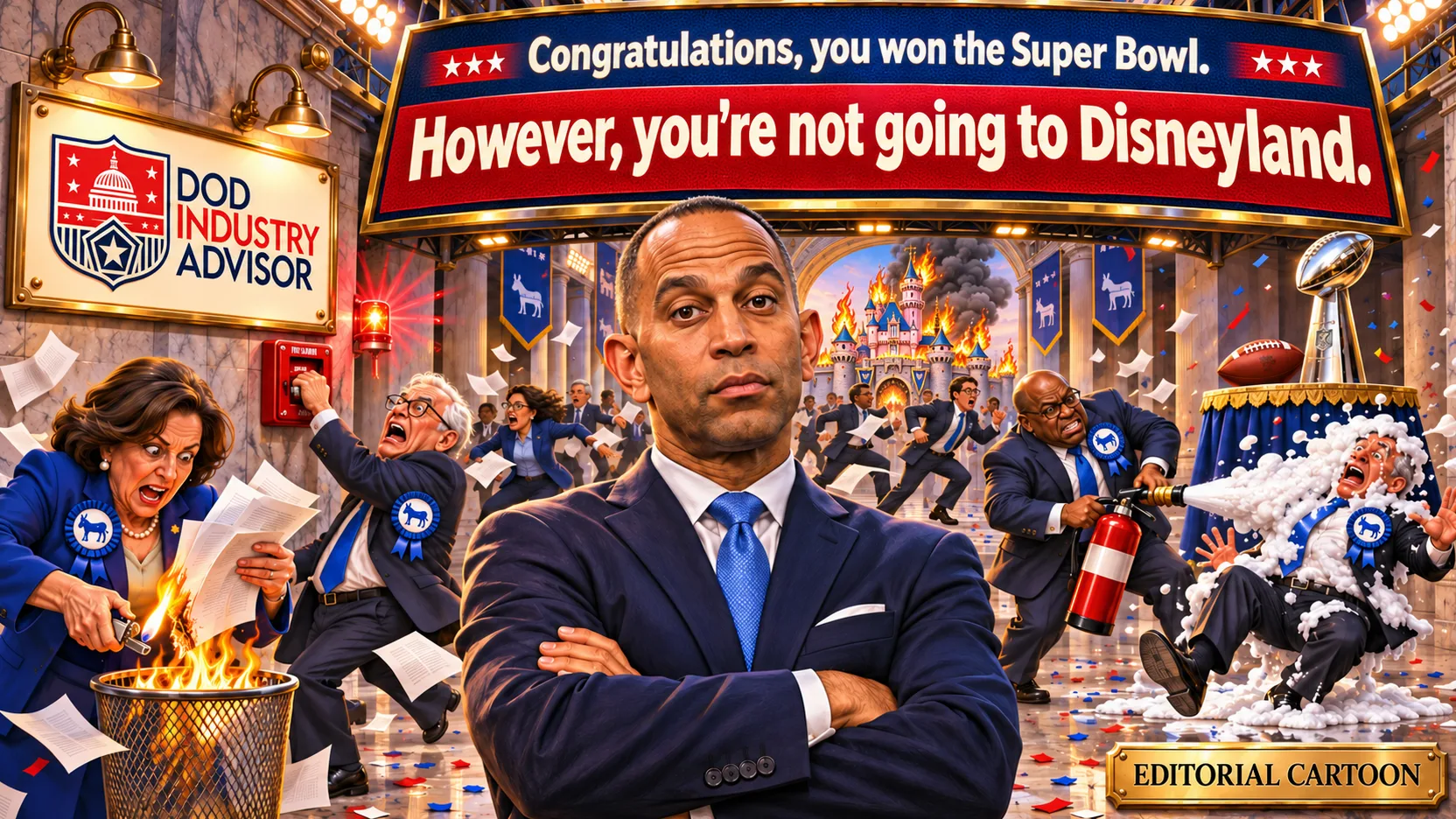
Congratulations, Democrats. You won the Super Bowl. You’re not going to Disneyland. In the cartoon, the castle is already on fire. Think of it as a kitchen fire during a full Saturday service. The people in the dining room still need you to take care of them. Nobody gets to ask how they voted before deciding whose table to check first.
My friends on the right tell me I’m too far left. They may be surprised that I support no tax on tips, a policy Republicans put into law. I also support Medicare for All, a policy championed by the left. On both, I want Congress to answer the same question: Who pays the bill?
Eligible workers can deduct up to $25,000 in qualified tips from federal taxable income for 2025 through 2028. Payroll taxes generally still apply. I’m glad the server can keep more of what she earns. I also want an answer for the cook who worked the same rush and got paid in wages. Before Congress extends the deduction, show who actually benefited and how much revenue it cost. Compare it with a credit that could reach both workers. Then name the offset.
Medicare for All isn’t free. In a 2020 study of five illustrative single-payer designs, the Congressional Budget Office estimated that federal health subsidies would rise by $1.5 trillion to $3 trillion in 2030 alone. Total national health spending could fall by $700 billion or rise by $300 billion, depending on the design. Families could pay less overall while Washington still needs substantial new revenue to cover the bills it takes over.
To my friends on the left: put the financing in the bill. If a payroll tax replaces employer premiums, publish the rate. If households pay more in taxes, show what they’d owe beside the premiums and out-of-pocket costs they’d shed. Show what a rural hospital would receive for keeping its emergency department open. Compare those numbers with a public option and with targeted improvements to the current system. Get an independent score. If the math comes up short, change the plan or tell voters how much you’d borrow.
There’s another statement on the kitchen table. An S&P 500 fund can give that same family a stake in UnitedHealth, Eli Lilly, or Abbott. They want care they can afford and a retirement account that grows. The Senate Medicare for All proposal would bar insurers from selling coverage that duplicates the public plan’s benefits. Investors bear the risk that changes in law affect their shares. Congress needs to explain what happens to the workers whose jobs depend on that business, and how a patient halfway through treatment keeps getting care.
Two outgoing presidents understood that the work carries on after the election. In 1952, with the Korean War still underway, Harry Truman brought Dwight Eisenhower to the White House and arranged for their teams to share information. In December 2008, George W. Bush announced emergency loans to automakers with Barack Obama about a month from taking office. You can disagree with Bush’s decision and still take his question seriously: What happens to workers and suppliers if we wait until January?
In Lead from No, Jim Camp Jr. recalls taking command of a military unit and learning that people were holding back in large meetings. He sat down with people across ranks and asked what he needed to hear. Congress can do that before the bill is written. Give the cook, the small business owner, and the rural hospital administrator the numbers. Listen long enough for their answers to change the bill.
The chef I worked for once nodded toward a table of businessmen who barely acknowledged the busboy clearing their plates. Watch how people treat the busboy, he told me. I remember the weight of the dish tub. I’d ask the winners to remember who’s still standing there when the celebration ends.
Sources: https://www.irs.gov/publications/p15 https://www.cbo.gov/publication/56811 https://www.congress.gov/119/bills/s1506/BILLS-119s1506is.pdf https://www.spglobal.com/spdji/en/indices/equity/sp-500-health-care-sector/ https://www.trumanlibrary.gov/node/355970 https://georgewbush-whitehouse.archives.gov/news/releases/2008/12/20081219.html https://www.cbsnews.com/live-updates/election-day-2026-midterms/
Written by Michael-David Komorous — retired USAF Colonel (C-17, MQ-1, ICBM), Pentagon legislative affairs alumnus, George Mason University faculty, MIT Fellow.
Source presentation is carried in the article body where applicable. Reported facts and analytic judgment are kept distinct.